Esempi virtuosi di accessibilità: la storia di Spazio Kor
Esploriamo il percorso di Spazio Kor, un centro culturale innovativo ed accessibile ad Asti

Introduction
This Privacy Notice aims to clearly and transparently explain which personal data we collect when you visit our website, why we collect it, how we use it, and what Your rights are.
We process your personal data in accordance with Regulation (EU) 2016/679 (GDPR) and applicable national data protection laws. We are committed to ensuring that all processing activities are carried out in accordance with the principles of lawfulness, fairness, transparency, data minimization, integrity, and confidentiality.
Specifically, in this notice you will find information about:
-
which data we collect about you and for what purposes;
-
the legal bases on which we process such data;
-
who we may share your data with;
-
how long we retain your data;
-
your rights and how to exercise them.
While we sometimes need Your data for example, to respond to your requests or improve our website), we do so with respect, care and only when truly necessary.
Our Privacy Promises
-
We deeply value your privacy, and for this reason, we guarantee that:
-
We treat your data as if it were our own.
-
We use your data only for the purposes outlined in this notice.
-
We retain your data only for as long as strictly necessary.
-
We do not share your data with third parties without a valid legal basis or your explicit consent.
1. Who Processes Your Personal Data
The Data Controller — that is, the entity that determines the purposes and means of the processing of Your personal data — is AccessiWay S.a.S., with registered office at 7 Rue du Général Henrion Bertier, 92200 Neuilly-sur-Sein registered with the Nanterre Trade and Companies Register under number 914 022 595.
AccessiWay is part of the team.blue group and, in certain cases, acts as joint controller together with team.blue NV, with registered office at Skaldenstraat 121, 9042 Ghent, Belgium. In this context, Your personal data may be shared within the group for statistical, administrative, operational, and service improvement purposes.
AccessiWay and team.blue have defined their respective roles and responsibilities under a joint controllership agreement pursuant to Article 26 of the GDPR, ensuring full compliance with data protection regulations.
For more information regarding joint controllership or to exercise Your rights, you may contact AccessiWay via email at the following email addresses:
📧 legal.fr@accessiway.com or info@accessiway.com.
2. Who This Privacy Notice Applies To
This notice applies to:
-
users who browse the website www.accessiway.com,
-
individuals who contact us through the form available on the website or via email;
-
users who interact with tools we have implemented (e.g. widgets, cookies);
-
individuals who, through the website or other channels, access external platforms or third-party entities through which they may submit a job application (e.g. recruiting portals or employment agencies).
-
In such cases, the privacy notices of the third parties involved — independent from AccessiWay — also apply.
3. What Data We Process
To manage your interaction with our website, we may process the following categories of personal data:
-
Identification and contact details such as name, surname, company, job title, email address, and phone number.
-
These data may be partially processed through our customer relationship management (CRM) system.
-
Data relating to your interaction with our services such as information collected via the website or through Hubspot, such as communication history, preferences, requests, and commercial or technical notes.
-
Technical data such as IP address, device type, operating system, browser, access times, and other data automatically recorded by our systems or servers.
-
Browsing data and preferences such as collected via cookies or similar technologies, in accordance with the choices expressed through the cookie consent banner.
-
Application data such as personal information included in your CV or other documents submitted through third-party platforms (e.g. professional experience, education, contact details).
-
These data are processed by AccessiWay only after being transmitted by the third party, which remains autonomous in the initial processing.
4. Purposes and Legal Basis of Processing
We process Your personal data in compliance with Regulation (EU) 2016/679 (GDPR) and applicable national data protection laws. Your data may be processed for the following purposes:
-
Technical operation of the website
We process technical data, using technical cookies and similar tools, to allow You to access the site, view it correctly, and ensure it functions properly (e.g. browsing, content loading, storing preferences).
📌Legal basis: this processing is necessary to provide a service requested by the user, pursuant to Article 6(1)(b) of the GDPR. Your consent is not required for these cookies.
-
Handling contact or support requests
When you send us a request — via the contact form or by email — we process your data to respond and provide the information requested.
📌 Legal basis: this processing is necessary to take steps at your request prior to entering into a contract, pursuant to Article 6(1)(b) of the GDPR.
-
Compliance with legal obligations
In certain cases, we may need to process your data to comply with legal obligations, such as tax, accounting, or IT security requirements.
📌 Legal basis: this processing is based on compliance with a legal obligation, pursuant to Article 6(1)(c) of the GDPR.
-
Statistical analysis and website improvement
We use analytical tools (e.g. analytical cookies) to collect aggregated data in order to understand how the website is used and to improve its content and functionality.
📌 Legal basis: we process this data only with your freely given and specific consent, pursuant to Article 6(1)(a) of the GDPR.
-
Marketing and Profiling
If you authorize us to do so, we may use your data to send you promotional communications or provide personalized content (e.g. through profiling cookies).
📌 Legal basis: this processing is carried out only with your explicit consent, pursuant to Article 6(1)(a) of the GDPR. You may withdraw your consent at any time without affecting the lawfulness of processing based on consent before its withdrawal.
-
Management of job applications through third parties
We may receive job applications via third-party platforms (e.g. job portals) or through recruitment agencies. In such cases, we process the submitted data to assess your suitability for the proposed role.
📌 Legal basis: this processing is necessary to take steps at your request prior to entering into a contract, pursuant to Article 6(1)(b) of the GDPR.
Note: the privacy policies of the third-party platforms or agencies involved also apply, independently of AccessiWay.
5. Cookies and Tracking Tools
This website uses a cookie management system provided by iubenda, which allows you to:
-
view a full and transparent list of the cookies in use;
-
modify or withdraw your consent at any time;
-
access the complete Cookie Policy, integrated in the cookie widget.
You can manage your preferences by clicking on the cookie widget icon located at the bottom left corner of every page on the site.
Technical cookies are necessary and therefore enabled by default. Other non-essential cookies (analytical, profiling) are only enabled with your consent.
For more information, please refer to the full Cookie Policy accessible from the cookie widget.
6. Use of accessWidget
This website integrates accessWidget, an automated accessibility tool developed by accessiBe Ltd. and distributed by AccessiWay. The widget allows users to personalize their browsing experience based on their needs.
When the user activates the widget, their IP address is technically transmitted, but:
-
it is not stored, tracked, or associated with identifiable individuals;
-
it is anonymized via a proxy located in the European Union;
-
it is not used for profiling or marketing purposes.
📌 Legal basis: provision of a service requested by the user (Article 6(1)(b) of the GDPR).
7. Data Security
We adopt appropriate technical and organizational measures to ensure the security, integrity, and confidentiality of the personal data we process. These measures are designed to prevent unauthorized access, loss, disclosure, or alteration of your data. In particular, we implement:
-
secure connections via HTTPS (SSL/TLS);
-
authentication systems and access control;
-
access limitation and internal access tracking mechanisms;
-
regular audits and verification procedures;
-
continuous updates to systems and security measures according to the level of risk.
8. Data Retention
Your personal data is stored only for the time strictly necessary to achieve the purposes for which it was collected. Specifically:
-
Contact data: up to 10 years if relevant for contractual or legal purposes;
-
Technical and browsing data: according to what is outlined in the Cookie Policy;
-
Marketing data: until consent is withdrawn.
9. Your Rights (Data Subject Rights)
As a data subject, you may exercise the rights provided under Articles 15–22 of the GDPR at any time. In particular, you have the right to:
-
Obtain confirmation as to whether or not your personal data is being processed and access such data (right of access);
-
Request the rectification of inaccurate personal data or the completion of incomplete data (right to rectification);
-
Request the erasure of your data, if the conditions set out in the GDPR are met (right to erasure);
-
Obtain restriction of processing where applicable (right to restriction);
-
Object to the processing of your data, in whole or in part, under certain circumstances (right to object);
-
Receive your data in a structured, commonly used, and machine-readable format, and, where technically feasible, have it transmitted directly to another controller (right to data portability);
-
Withdraw your consent at any time, without affecting the lawfulness of processing based on consent before its withdrawal.
📧 You can exercise Your rights at any time by contacting us at: legal.fr@accessiway.com.
🔗 If you are located in France and believe that the processing of your personal data violates applicable law, you have the right to lodge a complaint with the French Data Protection Authority (Commission Nationale de l’Informatique et des Libertés – CNIL) via the website: www.cnil.fr.
*If you have difficulty accessing our form, please feel free to contact us. Send an e-mail to info@accessiway.com
Spesso, tra le pagine di questo blog, emerge quanto la disabilità sia innanzitutto un tema che riguarda le persone in ogni sfaccettatura della vita che ognuno e ognuna di noi vive. Tra queste sfaccettature troviamo anche il mondo del teatro che forse più di altri ambiti richiede che l’accessibilità venga implementata innanzitutto all’interno degli spazi teatrali (davanti e dietro le quinte) ma anche per il contenuto stesso dell’opera teatrale che viene rappresentata per tutti i tipi di pubblico. Spazio Kor in questa intervista ci racconta la sua storia e le sfide che affronta ogni giorno nell’aver creato uno spazio inclusivo ed attento all’accessibilità all’interno di una provincia che ha evidentemente molto da dire e da raccontare. Tramite le parole di Francesca ed Elisabetta scopriamo insieme questo importante esempio di sfida per l’accessibilità non certo scontata.
- Ci raccontate qualcosa della vostra realtà? Quando siete nati e come siete cresciuti negli anni?
Nel cuore di Asti, l'Associazione CRAFT ETS ha dato vita nel 2016 a Spazio Kor, un progetto che ha trasformato la chiesa barocca sconsacrata di San Giuseppe in un centro culturale innovativo. L’associazione, nata nel 2014 da un gruppo di operatori culturali astigiani, ha voluto creare un luogo dove teatro contemporaneo e sperimentazione si incontrano per offrire al pubblico un'esperienza diversa dalle tradizionali programmazioni.
Spazio Kor non è solo un teatro, ma un vero e proprio laboratorio di idee e partecipazione. Qui si lavora per costruire una comunità attorno a una visione contemporanea del teatro, avvicinando il pubblico al "dietro le quinte" e ai processi creativi che rendono magico il mondo delle arti performative. L’obiettivo è chiaro: rendere il teatro accessibile, non solo in termini di inclusione fisica e sensoriale, ma anche come spazio di interazione e dialogo tra artisti e spettatori.
L’essenza partecipativa del progetto è evidente fin dalle sue origini. Il nome "Spazio Kor" è stato scelto dal pubblico durante l’evento inaugurale, un'esperienza interattiva che ha messo al centro la creatività e il coinvolgimento diretto delle persone. Da allora, il progetto è cresciuto, diventando un punto di riferimento per chi cerca un teatro capace di riflettere la complessità del presente.
Negli ultimi anni, Spazio Kor ha investito energie nella creazione di spettacoli accessibili a persone con disabilità fisiche, sensoriali e neurodivergenza. Questa attenzione alla pluralità e all'inclusione ha rafforzato il legame con la comunità, trasformando Spazio Kor in un luogo accogliente, dove l’architettura storica dialoga con la creatività contemporanea per dare vita a un’esperienza unica.
Spazio Kor è oggi un presidio culturale che non smette di innovare, confermandosi un punto di partenza per una nuova visione di teatro, fatta di partecipazione, accessibilità e passione condivisa.
- Che cosa rappresenta per Spazio Kor l’accessibilità? Quale significato le attribuite?
Per noi, accessibilità è molto più di una parola: è un atto di apertura, un invito al dialogo, un gesto di ascolto e di cura. È il cuore pulsante di ciò che facciamo, un principio che ci guida nella creazione di uno spazio in cui ogni persona possa sentirsi accolta, riconosciuta e valorizzata.
Da sempre, adottiamo un approccio orientato al pubblico, mettendo al centro chi attraversa e vive Spazio Kor ogni giorno. Ma dal 2021, grazie alla co-direzione di Chiara Bersani e Giulia Traversi, questo impegno si è intensificato: il nostro sogno è che il teatro diventi davvero uno spazio per tutti e di tutti, un luogo che rispecchi la ricchezza della diversità umana.
Per realizzarlo, abbiamo intrapreso un percorso che ci ha portati a sviluppare soluzioni accessibili e creative: dalle audiodescrizioni poetiche per persone cieche e ipovedenti agli incontri pre-spettacolo pensati per persone neurodivergenti, dai dialoghi con interpreti LIS per la comunità sorda ai touch tour che permettono di esplorare lo spazio scenico con il tatto.
Tutto questo non sarebbe possibile senza il prezioso contributo di Al.di.Qua. Artists - Alternative Disability Artists, la prima associazione di lavoratori e lavoratrici con disabilità, e il supporto di Lavanderia a Vapore. È un cammino fatto di attenzione e confronto, in cui spettatori e artisti diventano parte di un unico dialogo.
L’accessibilità, per noi, è un lavoro collettivo che prende vita solo grazie alla partecipazione di tanti. È un processo che ci insegna ogni giorno a guardare oltre, ad ascoltare meglio e a costruire insieme un teatro che sia davvero una casa per tutti.
- Il mondo del teatro è di per sé uno spazio aperto e artistico. Quali vantaggi o svantaggi porta l’accessibilità in uno spazio artistico di questo tipo?
Il teatro, per sua natura, è uno spazio aperto, un luogo di incontro e creatività. Integrare l’accessibilità in questo contesto porta con sé grandi vantaggi, ma anche sfide significative.
Tra i vantaggi più preziosi c’è la possibilità di lavorare con artisti con disabilità, che arricchiscono profondamente il panorama artistico e ampliano gli orizzonti creativi con le loro prospettive uniche. L’accessibilità diventa anche uno strumento potente per aprire il teatro a chi non vi è mai entrato prima: permette a persone con disabilità di partecipare a spettacoli ed eventi culturali.
In una realtà come quella di Asti, l’accessibilità è anche una questione di rappresentatività: portare in provincia artisti con disabilità significa creare modelli ispiratori per altre persone, mostrando che il teatro può essere uno spazio in cui sentirsi visti, ascoltati e valorizzati. È un modo per abbattere barriere non solo fisiche, ma anche sociali e culturali.
Tuttavia, questo percorso non è privo di sfide. Realizzare azioni accessibili richiede impegno, non solo in termini economici, ma anche di risorse umane e di tempo. Creare spettacoli che siano inclusivi significa progettare con cura ogni dettaglio, collaborare con esperti e costruire un dialogo continuo con il pubblico e con gli artisti.
Ma è proprio in questa complessità che si trova il valore più grande: trasformare il teatro in uno spazio davvero universale, dove ogni individuo può sentirsi parte di una narrazione condivisa. È una sfida che richiede dedizione, ma che regala un arricchimento culturale, umano e artistico senza pari.
- Secondo voi quali sono i grandi limiti per le persone con disabilità nel mondo teatrale?
Il mondo del teatro, con la sua straordinaria capacità di raccontare storie e creare emozioni, rischia ancora oggi di escludere chi potrebbe arricchirlo con le proprie esperienze e prospettive, sia sul palco che tra il pubblico.
Dal punto di vista degli artisti, uno dei limiti più grandi in Italia è l’impossibilità, per molti artisti con disabilità, di accedere a una formazione artistica e culturale adeguata. Questo non solo limita le opportunità professionali, ma priva il panorama teatrale di voci e visioni diverse. Anche quando si supera la barriera della formazione, resta quella degli spazi: molti teatri non sono strutturati per accogliere artisti con disabilità. Barriere architettoniche come scale senza alternative, camerini inaccessibili o assenza di bagni adeguati rendono il lavoro teatrale spesso impraticabile.
Dal punto di vista del pubblico, i limiti non sono meno evidenti. Ancora pochi teatri in Italia hanno avviato percorsi strutturati per rendere gli spettacoli davvero accessibili. La comunicazione stessa rappresenta spesso un ostacolo: i linguaggi utilizzati, sia nei contenuti che nella forma, non sempre tengono conto delle esigenze delle persone con disabilità sensoriali. E anche quando l’informazione è presente, spesso non è veicolata in modo accessibile: siti web poco chiari, materiali non pensati per persone con disabilità visive o uditive o mancanza di strumenti che facilitino l’accesso alle informazioni sono problematiche frequenti.
Il risultato è una frattura che tiene lontane molte persone dal teatro, privandole della possibilità di vivere la magia dello spettacolo dal vivo, ma soprattutto negando a questa arte la possibilità di essere davvero universale.
Redazione
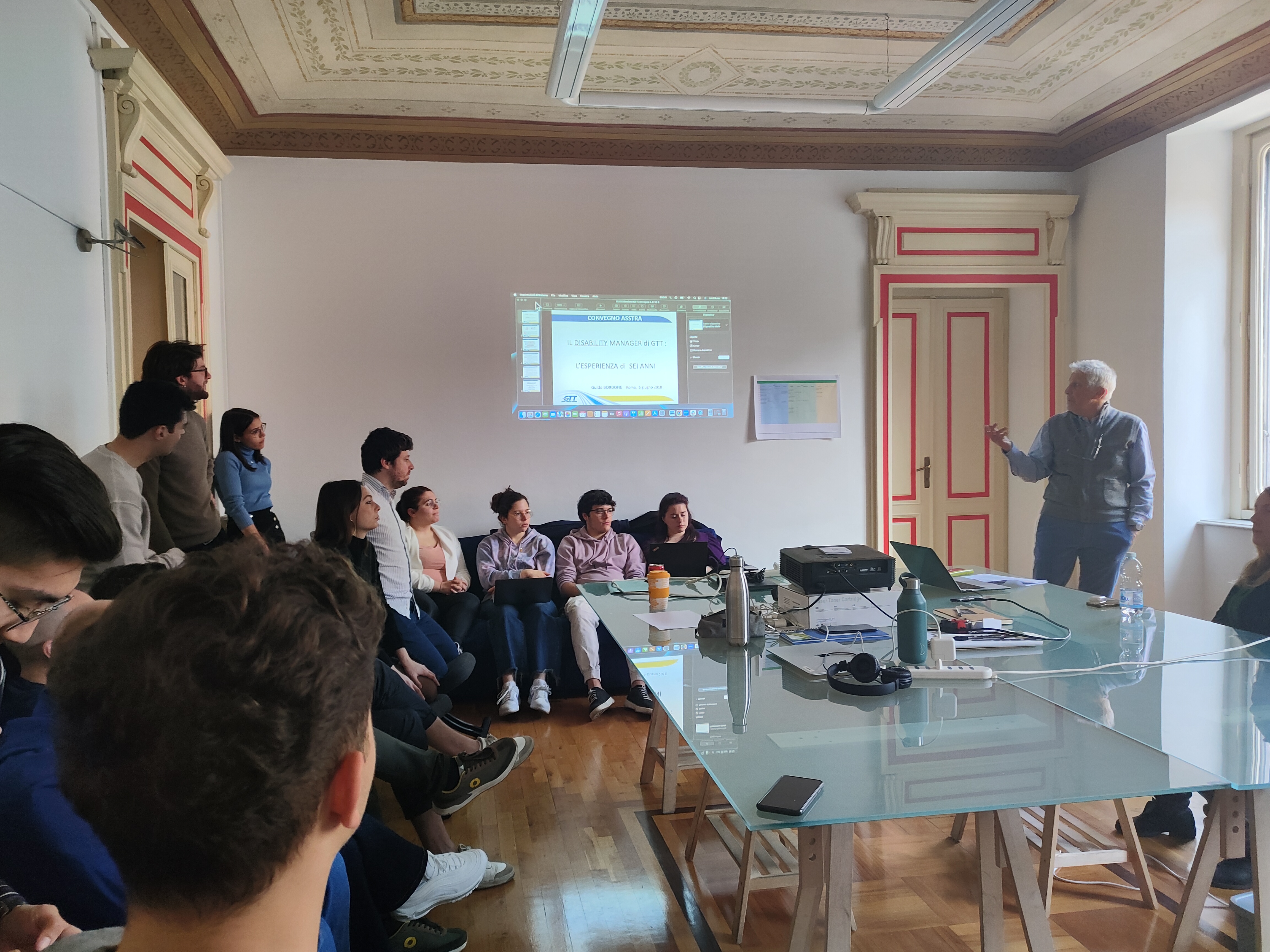
I mezzi pubblici sono un aspetto essenziale nella vita di una persona, per la sua autonomia.
Inclusione E Csr

Guido Giuliani
Lavorare in AccessiWay non è un semplice lavoro: richiede sposarne gli ideali e capire la mission
Inclusione E Csr

Author
Dal 2025, l'EAA rivoluziona l'accessibilità digitale, sfida e opportunità per imprese e PMI.
Accessibilita Digitale